
The client requests a resource.
A user, app, or AI agent calls a paid API endpoint.
x402 is an open, neutral standard for internet-native payments. It lets clients and servers exchange value directly through HTTP — no accounts, no checkout forms, and no separate billing workflow.
HTTP already has a native payment signal: 402 Payment Required. x402 turns that dormant status code into a practical request-response payment flow.
When a request arrives without payment, the server responds with 402 and includes the payment terms: amount, accepted asset, recipient, and resource description.
The client pays — typically with stablecoins — and retries the same request with proof attached. If the payment verifies, the API returns the resource.
That makes payments programmable, composable, and native to the same HTTP layer that APIs already use.
Traditional internet payments are built around human behavior: accounts, forms, approvals, prepaid credits, subscriptions, API keys, and delayed settlement.
That is friction for people and a dead end for agents. An AI agent cannot wait for onboarding, manage a new vendor account, or top up credits before every useful call.
x402 replaces that flow with an HTTP-native exchange: request, receive 402, pay instantly, retry, and get access.
That is the payment pattern the agentic web needs.
x402 is built on a simple idea: keep payment inside the HTTP conversation instead of redirecting users or agents into a separate checkout system.
A user, app, or AI agent calls a paid API endpoint.
The response describes price, asset, recipient, and what the endpoint provides.
Payment is sent with stablecoins and proof is attached to the next request.
Payment verifies, the resource is delivered, and no separate account is required.
For developers, the integration can be as small as adding payment middleware to protected routes. For clients, the protocol is just another HTTP flow.
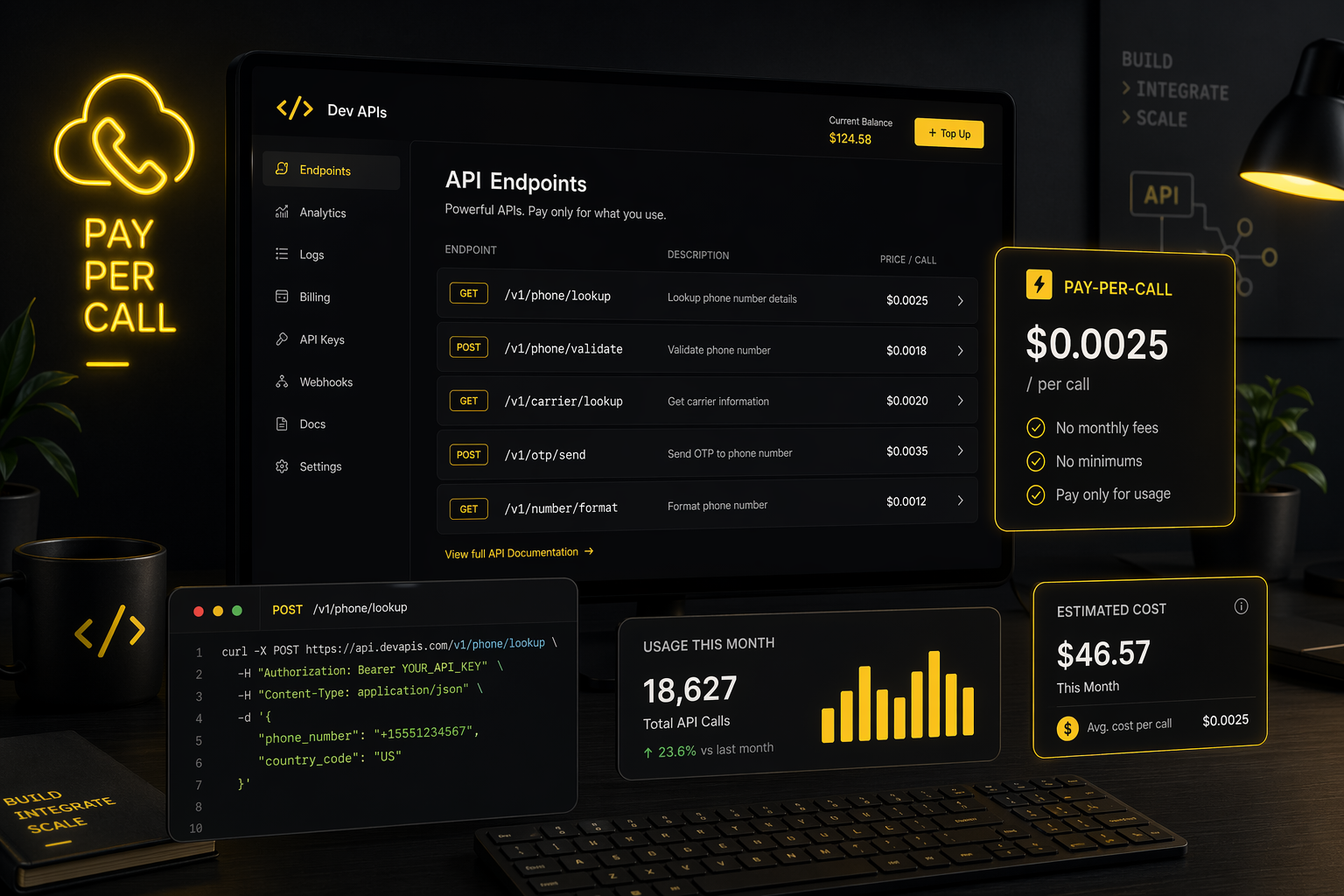
Charge for a single response, dataset, inference call, or precision tier without forcing users into subscriptions or prepaid credits.
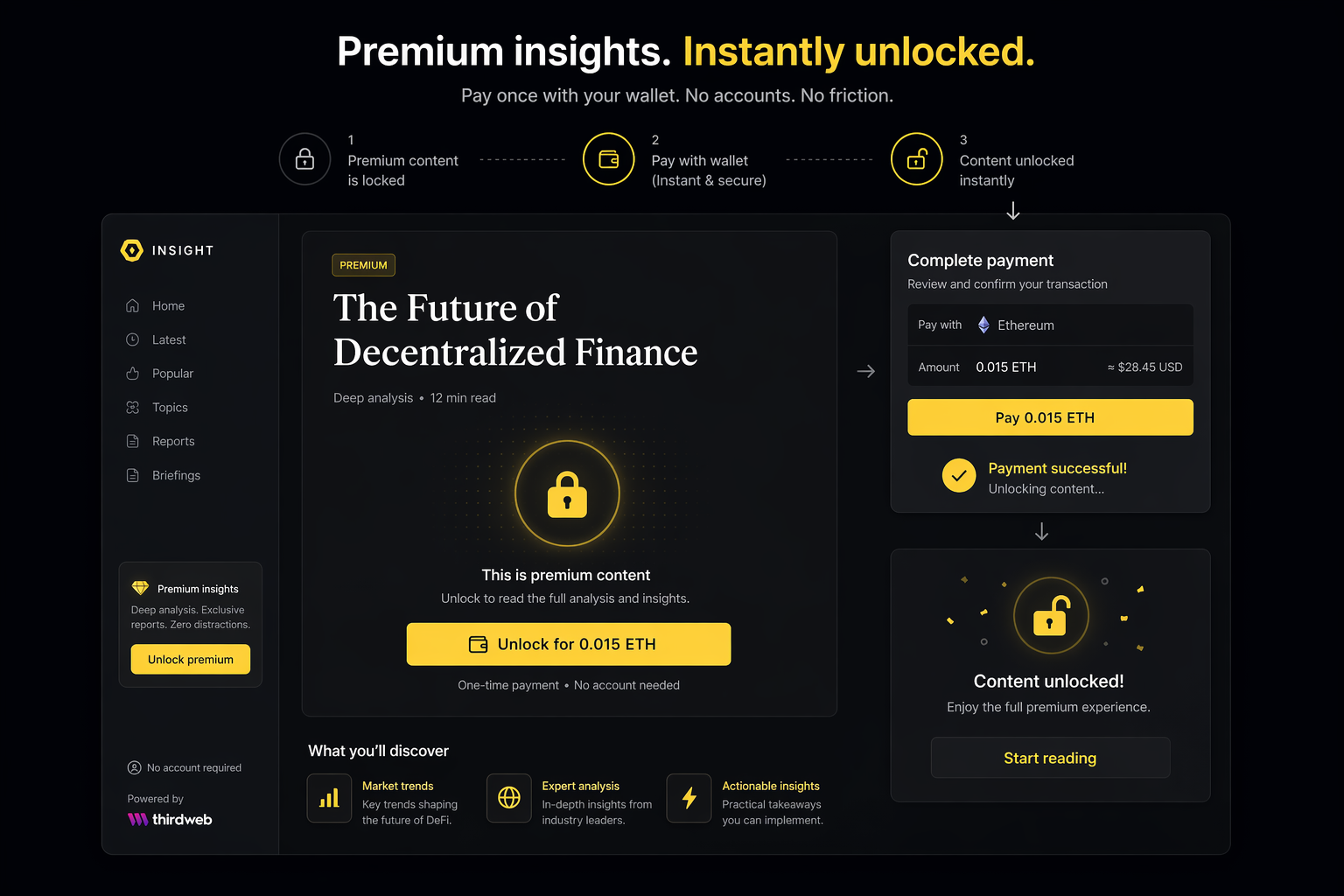
No signup form, no payment method setup, no approval delay. The client pays, retries, and receives the resource.
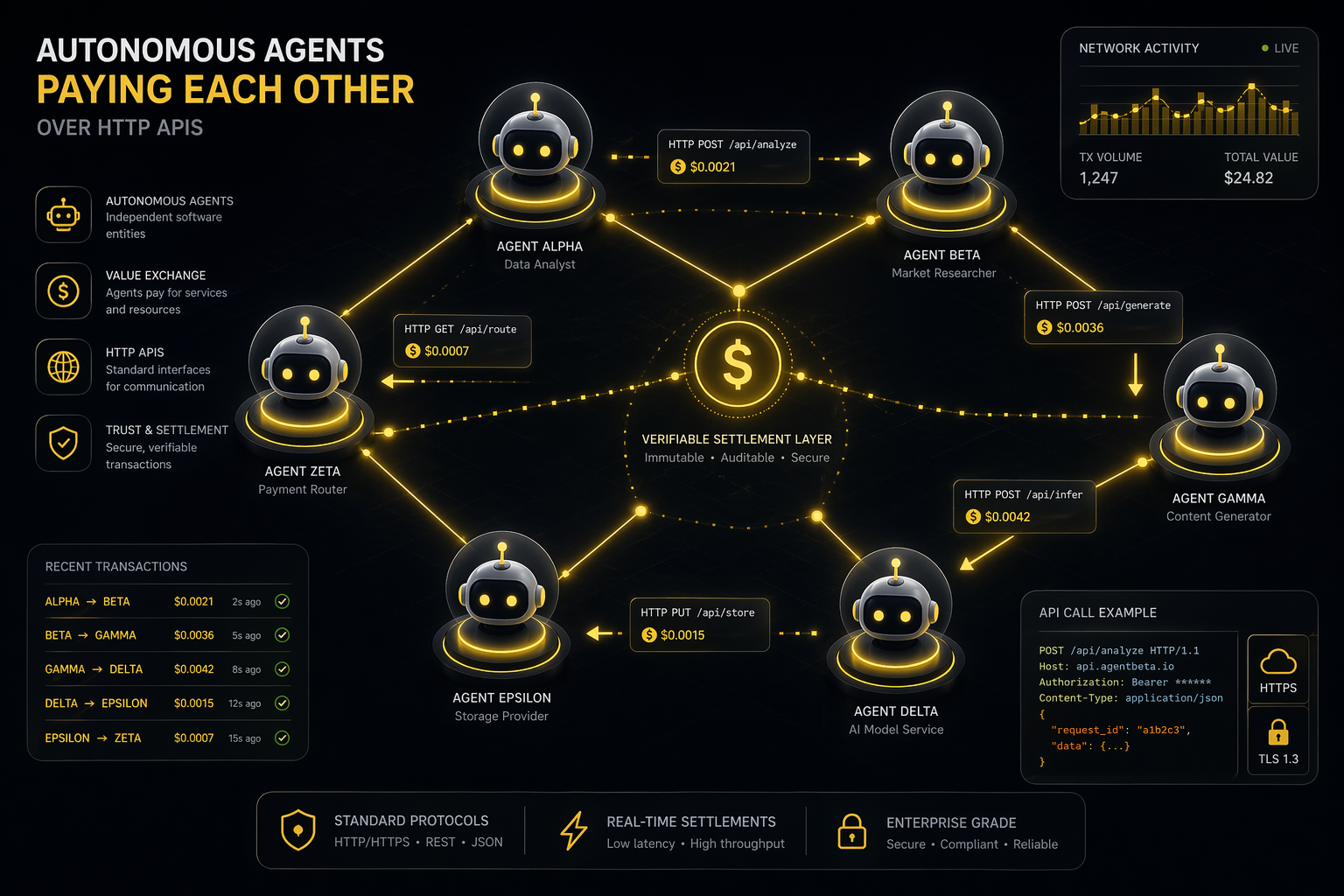
Agents can buy data, compute, and tools at the speed of software, with value settlement built into the request path.
x402 is designed as an open and neutral standard — not a closed checkout product. It is not tied to one merchant stack, one wallet, or one payment network.
The design goals are simple: zero protocol fees, no unnecessary wait, less friction, no central gatekeeper, and room for anyone to build on top.





As the ecosystem grows across wallets, APIs, infrastructure providers, and agents, x402 gives services a common payment language at the HTTP layer.
Satogate turns the x402 pattern into production-ready payment infrastructure: protected routes, stablecoin settlement, verification, KYT screening, and non-custodial routing.
We keep the protocol simple for your service: reply with payment terms, verify settlement, and deliver the resource once payment clears.
And because real businesses still touch fiat, Satogate can connect stablecoin revenue with compliant on-ramp and off-ramp partners when needed.
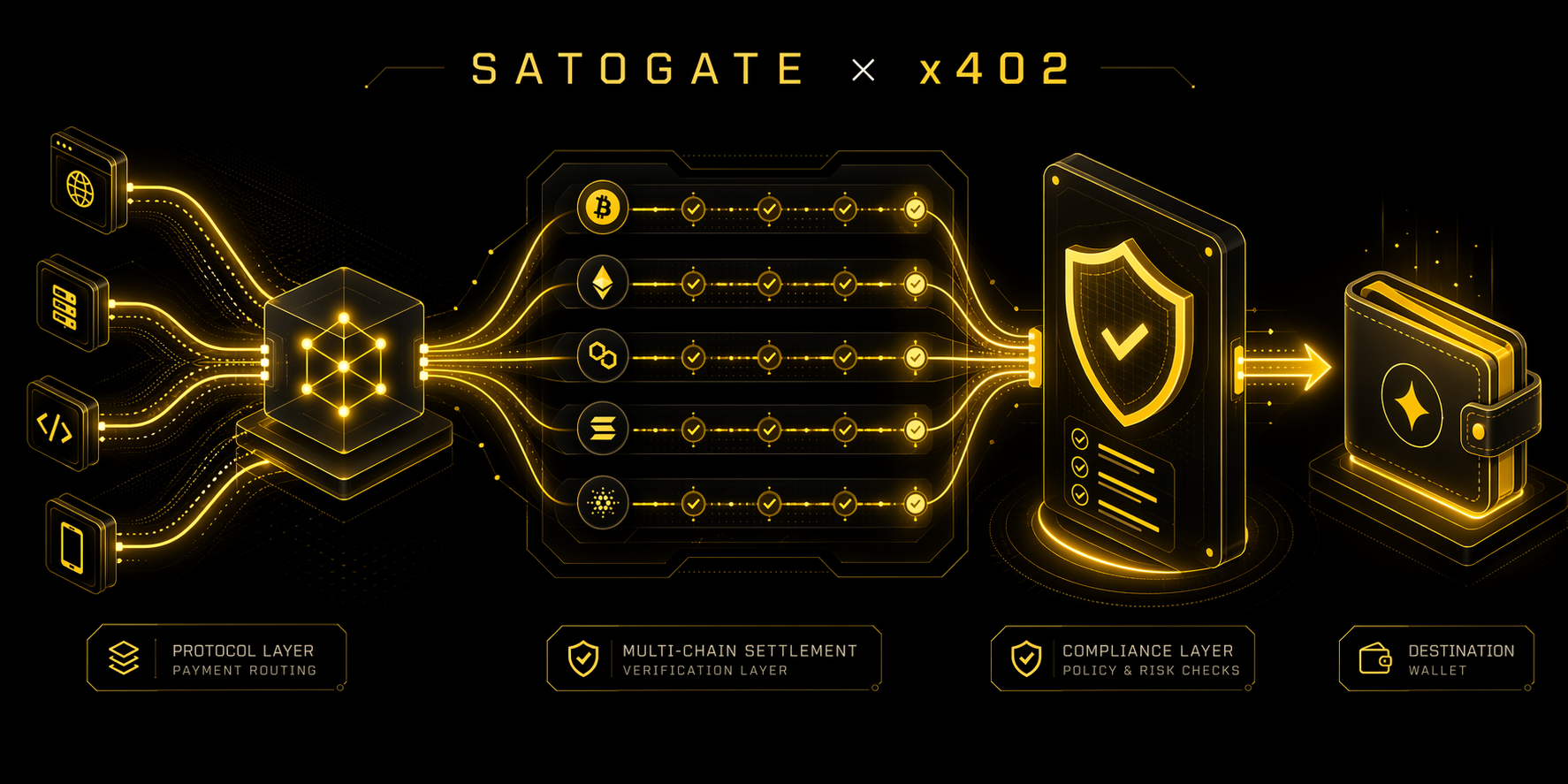
Be ready when clients, apps, and AI agents expect payment to be as native as the HTTP request itself.